Table of Contents
If you love a mutton curry with deep, layered flavor and a technique that sets it apart, this haldi mutton korma is worth seeking out. Instead of building the base with tomatoes or a simple onion masala, this recipe starts by cooking turmeric powder with water until it turns grainy and aromatic—a technique that gives the curry its distinctive color, earthy depth, and rich body. From there, the meat is seared, simmered with whole spices and yogurt, and finished with a smooth cashew‑onion paste, fragrant kewra water, and roasted makhana. The result is a glossy, aromatic curry that feels both traditional and deeply satisfying.
why make this recipe
This is a slow‑cooked, special‑occasion curry that rewards patience with restaurant‑style flavor. The grainy haldi base is the star technique, and the finishing touches of makhana and kewra make it feel celebration‑worthy.
- Uses a traditional grainy turmeric base for a unique flavor foundation.
- Rich with whole spices, yogurt, and a cashew‑onion paste.
- Finished with roasted makhana for texture and kewra for aroma.
- Perfect for a weekend dinner, Eid, or any time you want a standout curry.
how to make haldi mutton korma
Ingredients
For the Special Paste:
- 2 medium onions, fried into birista
- 1 tbsp desiccated coconut (nariyal burada)
- 20 cashew nuts (halves)
- 1/4 cup water
For the Base & Meat:
- 1.5 tbsp turmeric powder, mixed with 1/3 cup water
- 1 tbsp oil (for roasting makhana)
- 30–35 makhana (foxnuts)
- 1/4 cup mustard oil
- 1 kg meat (mutton or buff)
- 2 tbsp ginger‑garlic paste
- 2 medium onions, sliced
Whole Spices (Khada Masala):
- 1 tsp black peppercorns
- 7–8 cloves
- 1/2 piece nutmeg (jaiphal)
- 1‑inch cinnamon stick
- 1 mace flower (javitri)
- 5 green cardamoms
- 2 black cardamoms
- 2 bay leaves
Powdered Spices & Finishing:
- 1 tbsp red chilli powder
- 2 tbsp coriander powder
- 1 tsp Kashmiri chilli powder
- Salt, to taste
- 1 cup yogurt, whisked
- 1 tsp kewra water
- 1 cup water (for simmering)
Directions
- Make the secret paste: Blend the fried onions (birista), desiccated coconut, cashew nuts, and 1/4 cup water into a completely smooth paste. Set aside.
- Prep the haldi: Whisk 1.5 tbsp turmeric powder with 1/3 cup water to form a smooth liquid mixture.
- Roast makhana: Heat 1 tbsp oil in a pan, roast the makhana for 2 minutes until crunchy, and set aside.
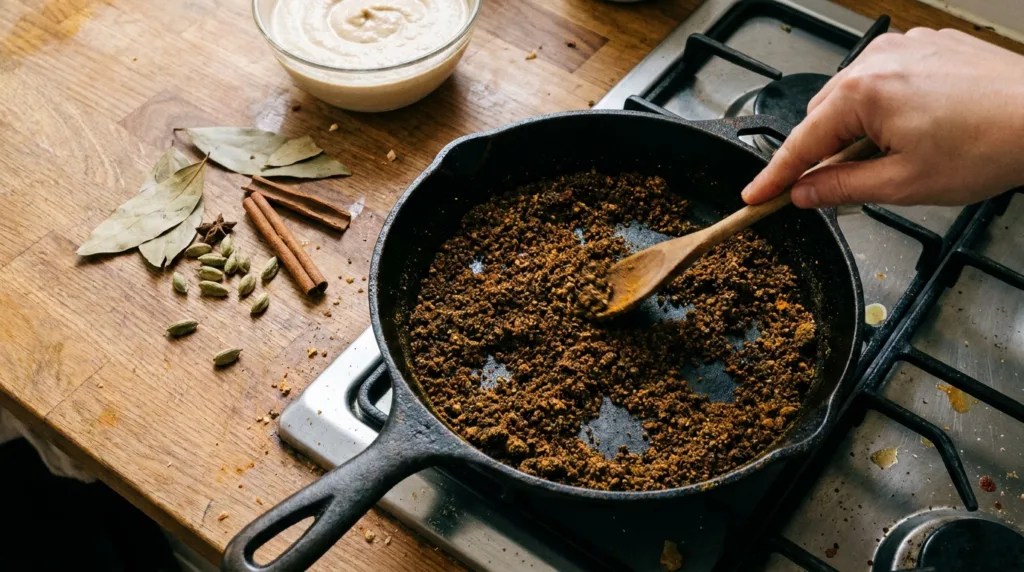
- Build the base: Pour 1/4 cup mustard oil into the pan. Add the turmeric mixture and cook on high flame until the moisture evaporates and the haldi turns completely grainy (danedaar).
- Sear the meat: Add 1 kg meat to the grainy haldi base. Sear on high flame for 2 minutes, then stir in 2 tbsp ginger‑garlic paste and cook for an additional 5 minutes.
- Infuse aromatics: Toss in all the whole spices (peppercorns, cloves, nutmeg, cinnamon, mace, cardamoms, and bay leaves). Pour in 1 cup of water and mix well.
- Soften onions: Add the 2 sliced medium onions. Cook on a medium flame until the onions soften beautifully.
- Spice and yogurt base: Stir in the red chilli powder, coriander powder, Kashmiri chilli powder, salt, and 1 cup of whisked yogurt. Combine thoroughly.
- Slow cook: Cover and cook on a medium flame for 30 minutes, stirring occasionally, until the meat is tender and flavors develop.
- Finish: Pour in the prepared cashew‑onion paste and stir‑cook for 1 minute. Add 1 tsp of fragrant kewra water and top with the roasted makhana. Simmer briefly until rich and glossy.
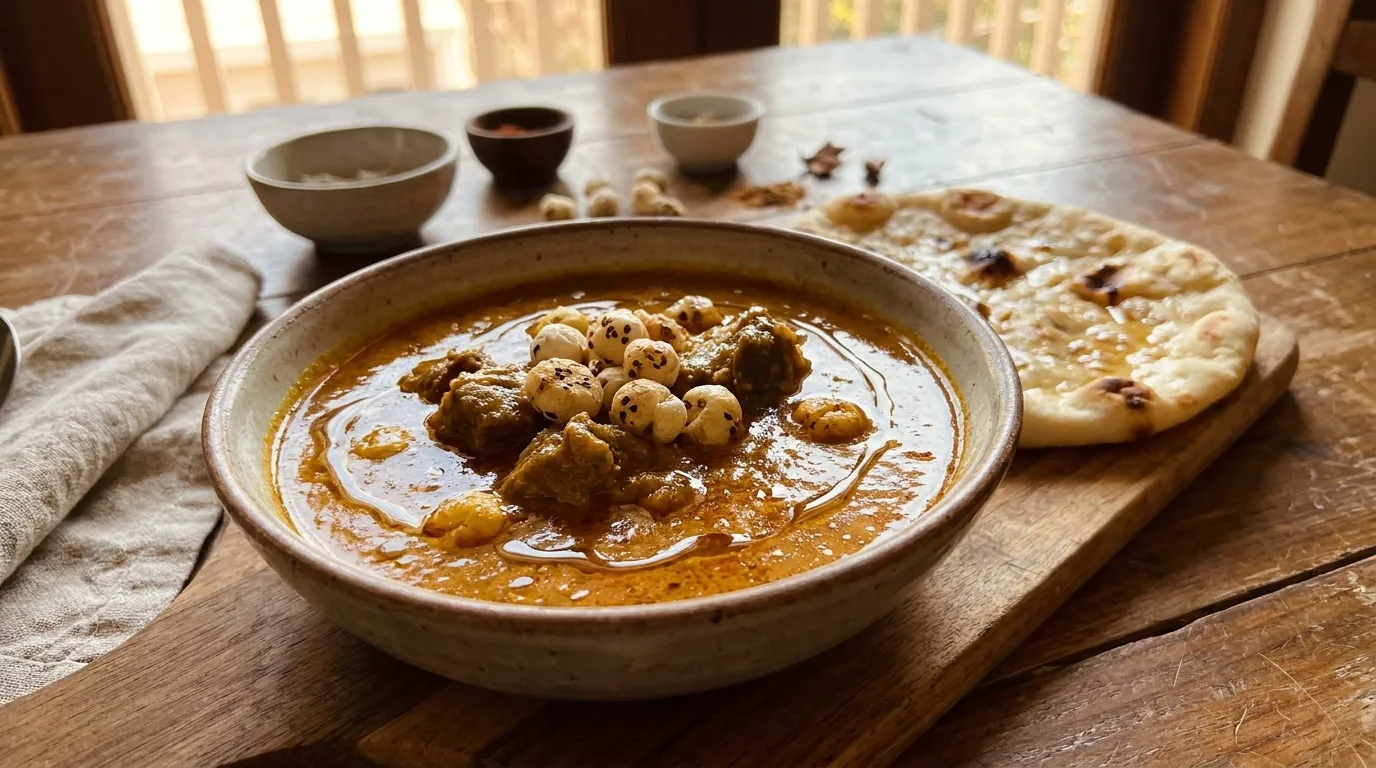
- Serve: Serve screaming hot with soft khamiri naan.
how to serve haldi mutton korma
Serve this curry hot with soft khamiri naan, flaky parathas, or plain steamed rice. A simple side of sliced onions, lemon wedges, and green chillies balances the richness. Because the gravy is thick and glossy, it clings well to bread and rice alike.
how to store haldi mutton korma
Store leftovers in an airtight container in the refrigerator for up to 3 days. Reheat gently on the stovetop over low heat, adding a splash of water if the gravy has thickened too much. The flavors often deepen overnight. Freezing is possible for up to 1 month, but the makhana may soften upon thawing; add fresh roasted makhana after reheating for the best texture.
tips to make haldi mutton korma
- The grainy haldi base is the defining step. Cook the turmeric mixture on high heat until the moisture fully evaporates and the powder looks dry and granular, not pasty.
- Use food‑grade mustard oil. If the raw mustard flavor is too strong, heat the oil until it just begins to smoke, then let it cool slightly before adding the turmeric mixture.
- Whisk the yogurt well before adding it to prevent curdling. Keep the heat at medium when stirring it in.
- Roast the makhana just before finishing so they stay crunchy.
- Let the curry rest for a few minutes after the final simmer so the oil can rise and the flavors settle.
variation
For a richer, restaurant‑style finish, add 1 tablespoon of ghee along with the kewra water at the end. For a slightly tangier gravy, stir in 1 teaspoon of lemon juice just before serving. Do not add tomatoes; they would change the defining grainy haldi character of this recipe.
FAQs
What does “grainy haldi” mean?
It refers to cooking turmeric powder with water on high heat until the moisture evaporates and the turmeric becomes dry, granular, and aromatic rather than pasty. This step builds a deep, earthy base for the curry.
Can I use boneless mutton instead of bone‑in?
Yes, but bone‑in cuts add more flavor and body to the gravy. If using boneless, reduce the simmering time slightly and check for tenderness earlier.
What is makhana, and where can I find it?
Makhana (foxnuts or lotus seeds) are puffed, crunchy seeds used in Indian cooking. They are available at Indian grocery stores and online. If unavailable, you can omit them, but they add a traditional texture contrast.
Is kewra water essential?
It is highly recommended for the authentic aroma. If you do not have it, a few drops of rose water can be used as a substitute, though the flavor will be slightly different.
Can I make this in a pressure cooker?
The supplied method is a stovetop slow cook. If using a pressure cooker, cook the meat until tender according to your cooker’s instructions, then finish with the cashew‑onion paste, kewra, and makhana on the stovetop to preserve the texture.
More Recipes on thinerecipes.com

Haldi Mutton Korma (Grainy Turmeric Mutton Curry)
Ingredients
Equipment
Method
- Blend the fried onions (birista), desiccated coconut, cashew nuts, and 1/4 cup water into a completely smooth paste. Set aside.
- Whisk 1.5 tbsp turmeric powder with 1/3 cup water to form a smooth liquid mixture.
- Heat 1 tbsp oil in a pan, roast the makhana for 2 minutes until crunchy, and set aside.
- Pour 1/4 cup mustard oil into the pan. Add the turmeric mixture and cook on high flame until the moisture evaporates and the haldi turns completely grainy (danedaar).
- Add 1 kg meat to the grainy haldi base. Sear on high flame for 2 minutes, then stir in 2 tbsp ginger‑garlic paste and cook for an additional 5 minutes.
- Toss in all the whole spices (peppercorns, cloves, nutmeg, cinnamon, mace, cardamoms, and bay leaves). Pour in 1 cup of water and mix well.
- Add the 2 sliced medium onions. Cook on a medium flame until the onions soften beautifully.
- Stir in the red chilli powder, coriander powder, Kashmiri chilli powder, salt, and 1 cup of whisked yogurt. Combine thoroughly.
- Cover and cook on a medium flame for 30 minutes, stirring occasionally, until the meat is tender and flavors develop.
- Pour in the prepared cashew‑onion paste and stir‑cook for 1 minute. Add 1 tsp of fragrant kewra water and top with the roasted makhana. Simmer briefly until rich and glossy.
- Serve hot with soft khamiri naan.