Table of Contents
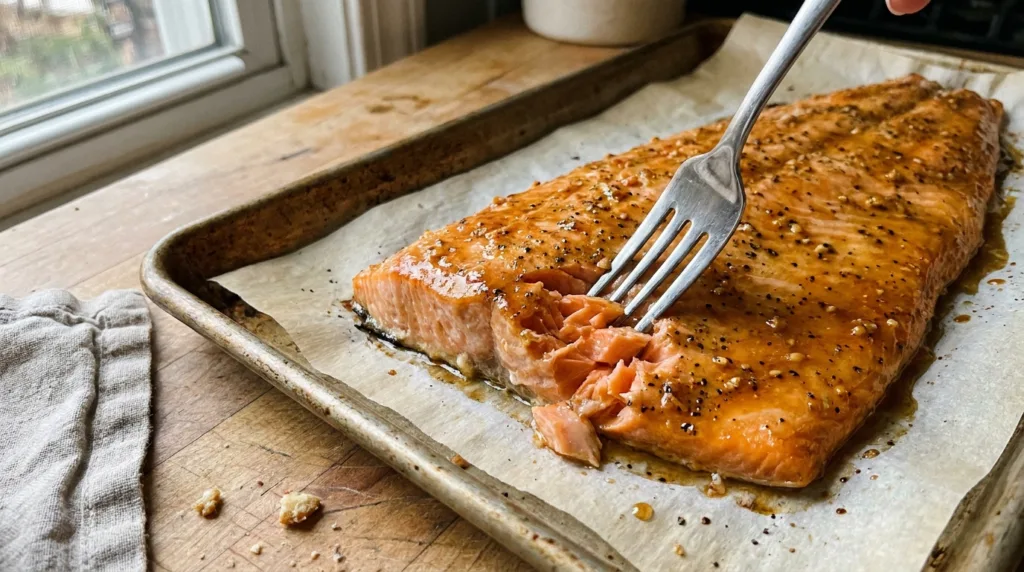
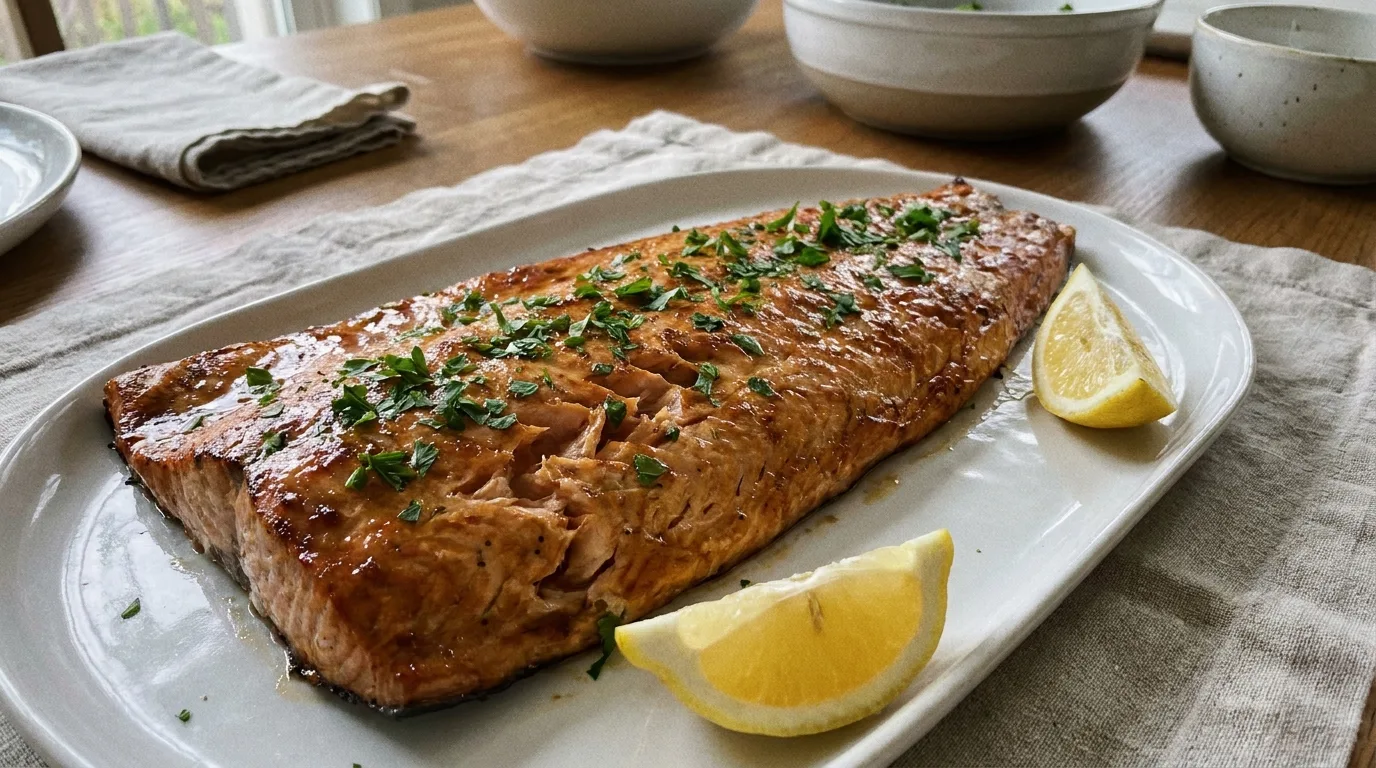
This maple Dijon baked salmon is a simple turkey alternative for a smaller Thanksgiving table. A garlic, maple, and Dijon glaze coats a tender fillet that bakes until flaky, with a little extra glaze brushed on at the end.
why make this recipe
Salmon bakes much faster than a turkey, so it is a practical main dish when you are cooking for a few people. The maple adds a touch of sweetness, the Dijon adds tang, and the garlic gives the glaze a savory edge.
- It needs one baking sheet and a short ingredient list.
- The glaze mixes in one bowl while the oven heats.
- One fillet feeds about four people.
- It pairs well with traditional Thanksgiving sides.
how to make Maple Dijon Baked Salmon
Ingredients
- 1 1/2 pounds center-cut salmon fillet, skin on, about 1 to 1 1/4 inches thick (680 g)
- 3 tablespoons pure maple syrup (45 ml)
- 2 tablespoons Dijon mustard (30 g)
- 2 garlic cloves, finely grated
- 1 tablespoon olive oil
- 3/4 teaspoon kosher salt, divided
- 1/4 teaspoon freshly ground black pepper
- Chopped fresh parsley, for garnish (optional)
- Lemon wedges, for serving (optional)
Directions
- Heat the oven: Heat the oven to 400°F (200°C) with a rack in the middle. Line a rimmed baking sheet with parchment paper.
- Prepare the salmon: Pat the salmon dry with paper towels. Run your fingers along the flesh and remove any pin bones with clean tweezers. Place the fillet skin side down on the baking sheet and season it with 1/2 teaspoon of the salt and the pepper.
- Mix the glaze: In a small bowl, whisk the maple syrup, Dijon mustard, garlic, olive oil, and the remaining 1/4 teaspoon salt until smooth. Transfer 2 tablespoons to a separate clean bowl for finishing, and set it aside.
- Glaze the salmon: Spread the remaining glaze evenly over the top of the salmon with a spoon or clean brush.
- Bake: Bake for 15 to 20 minutes, until the salmon flakes easily with a fork and the thickest part reads 145°F (63°C) on an instant-read thermometer. If the fillet is thinner than 1 inch, start checking at 12 minutes.
- Rest and finish: Let the salmon rest on the pan for 5 minutes. Brush the reserved glaze over the warm salmon with a clean brush or spoon.
- Serve: Slide a wide spatula between the flesh and the skin, and lift the salmon onto a platter. Sprinkle with parsley and serve with lemon wedges if you like.
how to serve Maple Dijon Baked Salmon
Serve the salmon warm on a platter, in large pieces that guests can flake with a fork. It works with roasted vegetables, mashed potatoes, green beans, or a simple salad.
For a small holiday meal, add one or two traditional sides and a dessert. The fillet serves about four.
how to store Maple Dijon Baked Salmon
Refrigerate leftovers in a covered, shallow container within 2 hours of cooking, or within 1 hour if the room is above 90°F (32°C). Keep them at 40°F (4°C) or below and use within 3 to 4 days.
To reheat, cover the salmon loosely with foil and warm it in a 300°F (150°C) oven until it reaches 165°F (74°C). Reheated salmon will be firmer than freshly baked.
tips to make Maple Dijon Baked Salmon
- Pat the salmon dry so the glaze clings to it.
- Choose a center-cut fillet of even thickness for even cooking.
- Use pure maple syrup for the best flavor.
- Set aside the finishing glaze before it touches the raw fish.
- Check the temperature in the thickest part of the fillet.
- Rest the salmon for a few minutes before moving it, so it holds together better.
variation
For a whole-grain version, replace the 2 tablespoons Dijon mustard with 2 tablespoons whole-grain Dijon. Keep the other ingredients and bake time the same.
FAQs
What temperature should salmon be cooked to?
The U.S. safe minimum for fish is 145°F, measured in the thickest part. The salmon should also flake easily with a fork.
Can I use skinless salmon?
Yes. Line the pan with parchment and use the same ingredients. Start checking for doneness at the early end of the range.
Why did my glaze burn?
Maple syrup caramelizes quickly. Use a rack in the middle of the oven, keep the fillet on parchment, and avoid leaving it in longer than needed.
Can I make this for a bigger group?
Use a larger fillet and increase the glaze in proportion. Thickness affects timing, so check early with a thermometer.
Can I make the glaze ahead?
Yes. Whisk it, cover it, and refrigerate it for up to 2 days. Bring it to room temperature and whisk again before using.
What should I serve with baked salmon on Thanksgiving?
Roasted vegetables, potatoes, or a green salad work well. Keep the sides simple so the glaze stays the focus.
More Recipes on thinerecipes.com

Maple Dijon Baked Salmon
Ingredients
Equipment
Method
- Heat the oven to 400°F (200°C) with a rack in the middle. Line a rimmed baking sheet with parchment paper.
- Pat the salmon dry and remove any pin bones. Place skin side down on the pan and season with 1/2 teaspoon salt and the pepper.
- Whisk the maple syrup, Dijon, garlic, olive oil, and remaining 1/4 teaspoon salt. Transfer 2 tablespoons to a separate clean bowl and set aside.
- Spread the remaining glaze over the top of the salmon.
- Bake for 15 to 20 minutes, until the salmon flakes easily and the thickest part reads 145°F (63°C). Start checking at 12 minutes if the fillet is thinner than 1 inch.
- Rest on the pan for 5 minutes. Brush the reserved glaze over the warm salmon.
- Slide a spatula between the flesh and skin, transfer to a platter, and garnish with parsley and lemon wedges if desired.